
Dumbbell Bench Press
Equipment Required
- Pair of dumbbells
- Bench or stable surface
Muscle Groups Targeted
- Chest (pectoralis major)
- Shoulders (anterior deltoids)
- Triceps
- Stabiliser muscles of the core
How To Do It
- Lie back on the bench with a dumbbell in each hand, feet flat on the floor.
- Press the dumbbells up so your arms are straight, wrists over your shoulders.
- Lower the weights slowly to the sides of your chest, elbows bent at about 75°.
- Press the dumbbells back up, keeping your shoulder blades tucked gently under you.
- Repeat, moving with control and a steady breath.
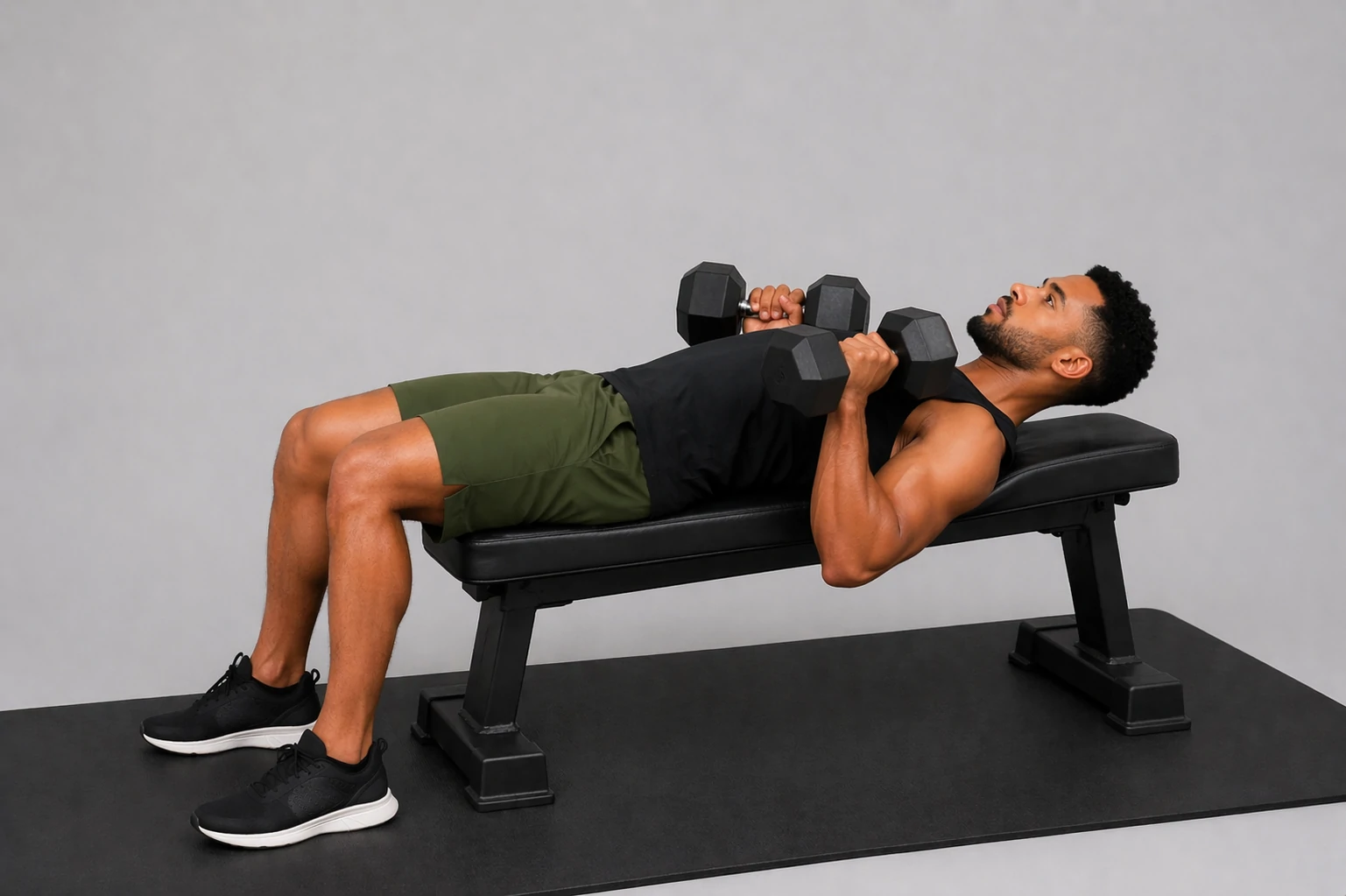
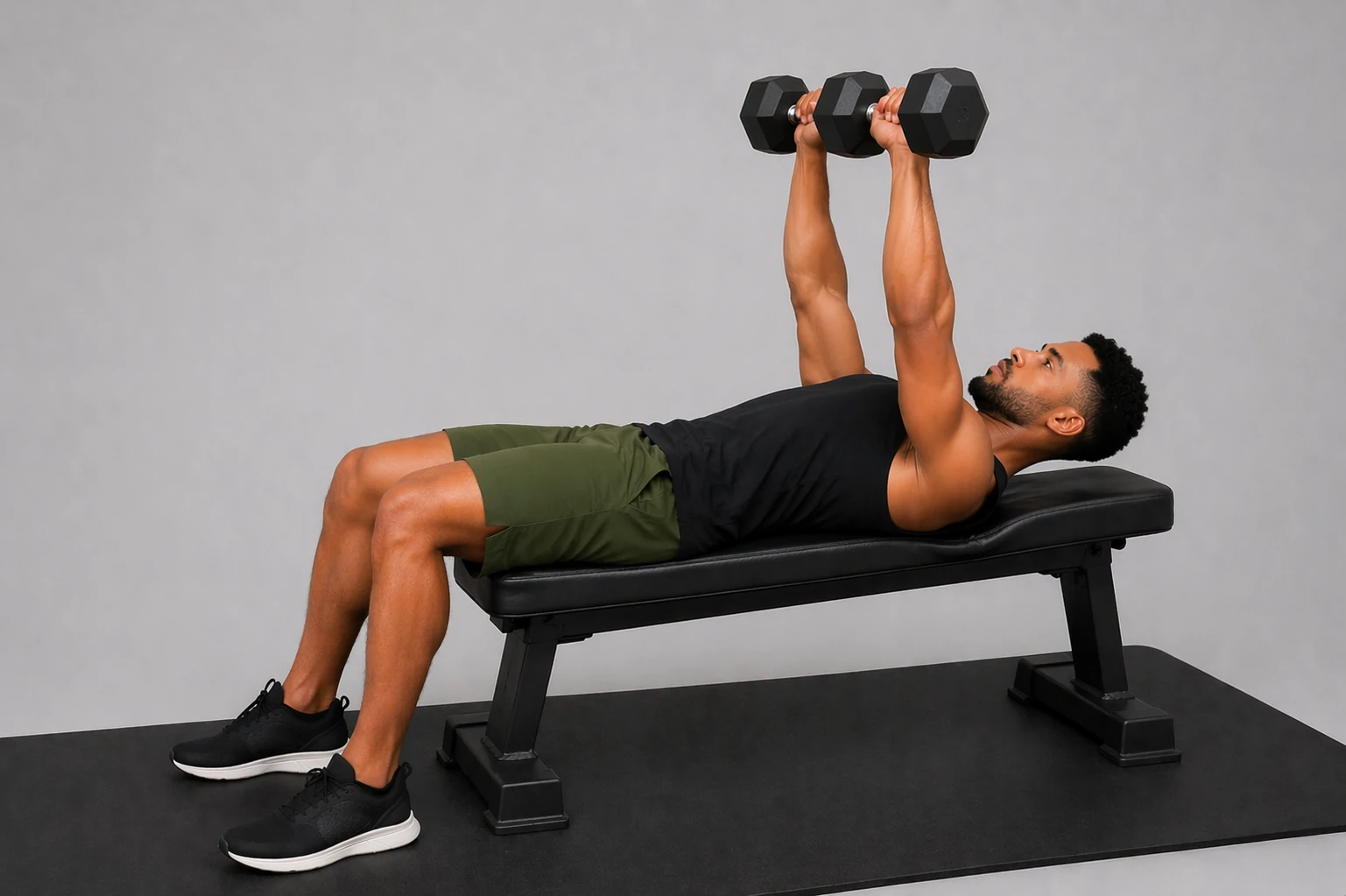
Dumbbells allow your arms to move more freely than a barbell, which can feel more comfortable on the shoulders. If pressing movements are causing joint discomfort rather than muscular effort, it’s worth understanding how to approach training around injury.
Tips & Cues
- Keep your wrists straight and stacked above your elbows.
- Maintain a stable position on the bench without excessive arching.
- Press your feet into the floor to create full-body stability.
- If no bench is available, you can perform a floor press variation instead.
Why It Matters
The dumbbell bench press is one of the most effective ways to build balanced upper body strength. Because each arm works independently, it helps correct strength differences between sides and improves coordination through the movement.
Compared with a barbell bench press, dumbbells allow for a more natural pressing path and require more control from stabilising muscles. That often makes them feel more comfortable on the shoulders while still delivering a strong strength stimulus.
This combination of strength, control, and joint-friendly movement makes the dumbbell bench press a reliable option whether you’re building muscle, returning from time off, or simply looking for a pressing movement you can repeat consistently over time.
Part of the optimal health library
Use this exercise in your training plan
Create an account to use exercises like the dumbbell bench press in your training plan.
Create an account to use this exercise