
How to Build a Weekly Aerobic Training Plan
Knowing aerobic exercise is beneficial is one thing; fitting it into a busy week is another. A useful plan sets out what you’ll do, when it fits and when to take it easy.
You don't need a pool, bicycle or gym. Start with what’s available; walking is often simplest.
1. Choose Activities You Can Actually Do
Aerobic movement raises your heart rate and breathing. Try brisk walking, cycling, swimming, jogging, rowing or classes — or stick with one activity you enjoy.
Consider safety, access, cost, weather and enjoyment. Leave out activities you cannot realistically do. A repeatable walking plan beats an elaborate, impractical schedule.
2. Decide How Often to Train
Adult health guidelines recommend 150–300 minutes of moderate or 75–150 minutes of vigorous aerobic activity weekly, or a combination. These are longer-term targets, not first-week requirements. See How Often Should I Do Aerobic Exercise?
If you're starting from little activity, try two or three manageable sessions. Even ten minutes count. Build consistency first, considering any other training you do.
3. Plan Effort as Well as Time
Not every session needs to feel hard. For an easy or moderate session, the talk test is useful: at a moderate effort you can still talk, although singing comfortably may be difficult. At vigorous intensity, speaking more than a few words without pausing for breath is harder.
Start with comfortable, repeatable sessions. As fitness improves, consider adding a harder session, with easier days between demanding efforts. Our article on improving VO₂ max explores different ways to build aerobic fitness.
4. Fit Sessions Around Your Actual Week
Start with days you could realistically exercise, rather than filling every blank space in a calendar. Work shifts, family commitments, access to facilities and recovery all matter. If a particular activity is only possible on Saturday, note that. If Wednesday is unpredictable, give yourself a more flexible option.
Allow lighter days or rest. If you miss a session, adjust rather than cramming the missed minutes into another day.
5. Look at a Sample Week — Then Make It Yours
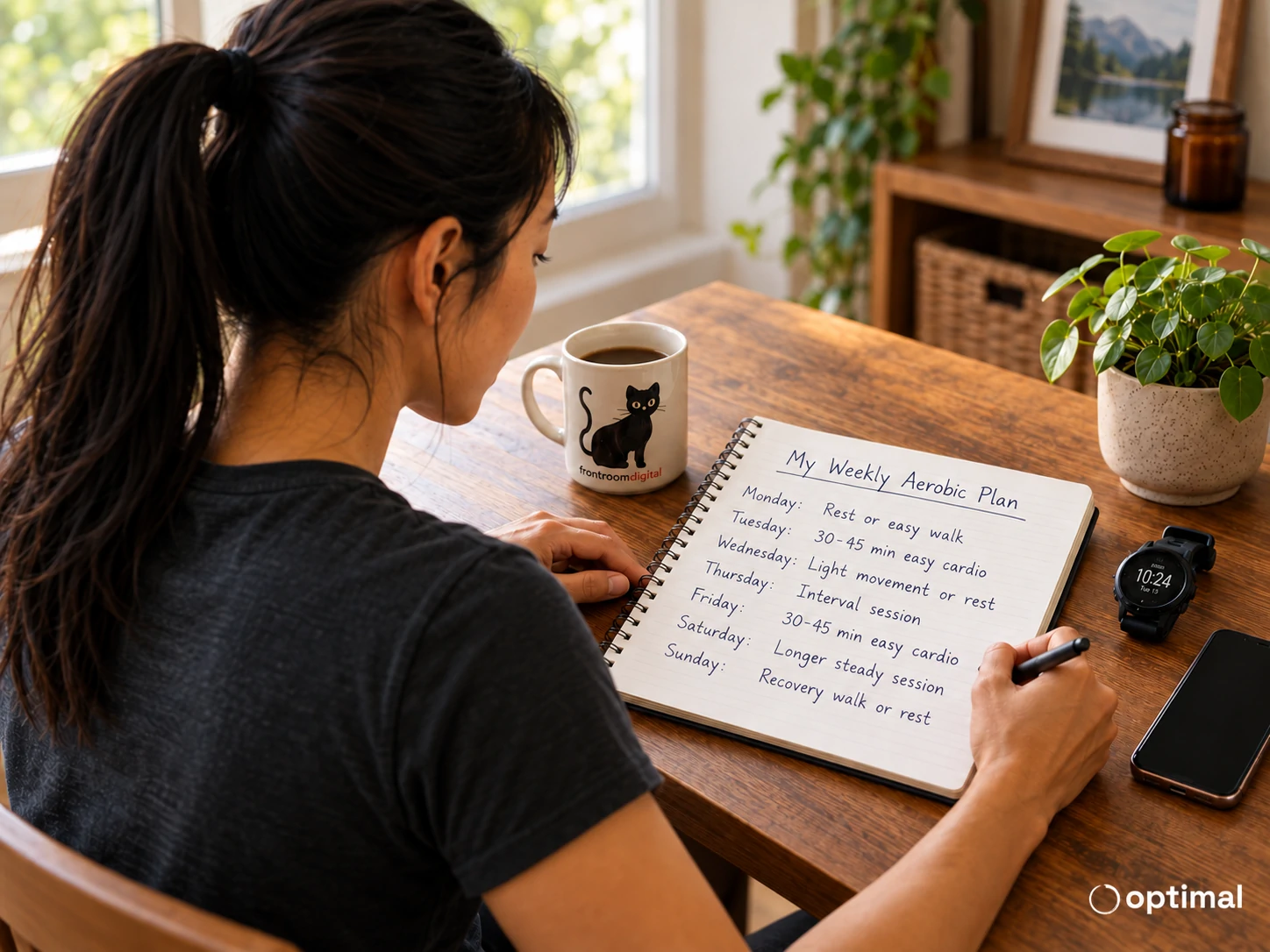
Here's an illustrative starting week for someone who can walk comfortably and wants three short aerobic sessions. It is not a prescribed programme or a universal target.
| Day | Possible plan |
|---|---|
| Monday | 20-minute comfortable walk |
| Tuesday | Rest or ordinary daily movement |
| Wednesday | 20-minute brisk walk, at a conversational pace |
| Thursday | Rest or easy movement |
| Friday | Rest or easy movement |
| Saturday | 25-minute comfortable walk |
| Sunday | Rest or relaxed movement |
This example totals 65 minutes. Your starting point may be lower or higher. Substitute other accessible activities if you prefer; the point is to learn the planning principles, not copy these days exactly.
6. Progress Gradually and Revisit the Plan
After a week or two, ask yourself: Did these sessions fit? Was the effort manageable? Did you recover well? If the week felt sustainable, you could extend one session slightly, add another short session, or gradually increase the effort of a session you already do. Change one thing at a time and give yourself room to adapt.
If Thursday never works, move that session. If walking suits you better than cycling, switch. Your plan should evolve with your life.
When to Adjust or Seek Advice
Choose activities and effort levels that are appropriate for your health and mobility. If you have a relevant medical condition, have been inactive for a long time or are uncertain about increasing exercise intensity, seek advice from your GP or another qualified clinician. Stop exercising and seek urgent medical help for concerning symptoms such as chest pain, fainting or severe, unusual shortness of breath. Our guide to training around injury may also help you think about limitations.
Build Your Aerobic Weekly Plan in optimal
Ready to put this into practice? optimal lets you choose aerobic activities, set your weekly session frequency, identify available days and review a suggested schedule before saving it. Once you've created your plan, you can log the activities you actually complete against it, track your progress and set goals for improvement. You do not need to follow the sample week above.
If you already have a Weekly Plan, saving a new one can replace it. optimal warns you and asks for explicit confirmation first.
Final Thought
A successful aerobic plan is one you can return to next week. Start with what is available, make room for recovery, and adjust as you learn.
Plan for the life you have, and let your fitness grow from there.
Part of the optimal health library
Build your aerobic Weekly Plan
Choose aerobic activities you can do, select your available days and build a plan in optimal. Create a free account to get started.
Build Your Aerobic Weekly Plan