
Reducing Salt Intake
Reducing salt intake is one of the simplest ways to support better heart health. It matters especially if you have high blood pressure, fluid retention, or a family history of cardiovascular disease.
Why Salt Matters
Salt contains sodium, which your body needs in small amounts. But most people consume far more than they need. Too much sodium can raise blood pressure, which increases the risk of heart disease, stroke, and kidney problems over time.
How Much Is Too Much?
Most guidelines recommend keeping sodium intake below 2,000 mg per day, which is about 5 grams of salt. Many people consume much more than this without realising, especially when packaged foods and takeaway meals are part of the routine.
Where Salt Hides
Most excess salt does not come from the salt shaker. It usually comes from everyday foods that do not even taste especially salty.
- Processed and packaged foods
- Takeaway and restaurant meals
- Sauces and condiments such as soy sauce, stock cubes, and gravy mixes
- Snack foods like chips, crackers, and savoury biscuits
- Processed meats, canned soups, and ready-made meals
How to Reduce Your Salt Intake
- Cook more meals at home using fresh ingredients
- Check nutrition labels and compare lower-sodium options
- Cut back on processed foods and frequent takeaway meals
- Use herbs, spices, garlic, and citrus for flavour instead of adding more salt
- Be careful with sauces, seasoning mixes, and convenience foods
- Make changes gradually so your taste adjusts over time
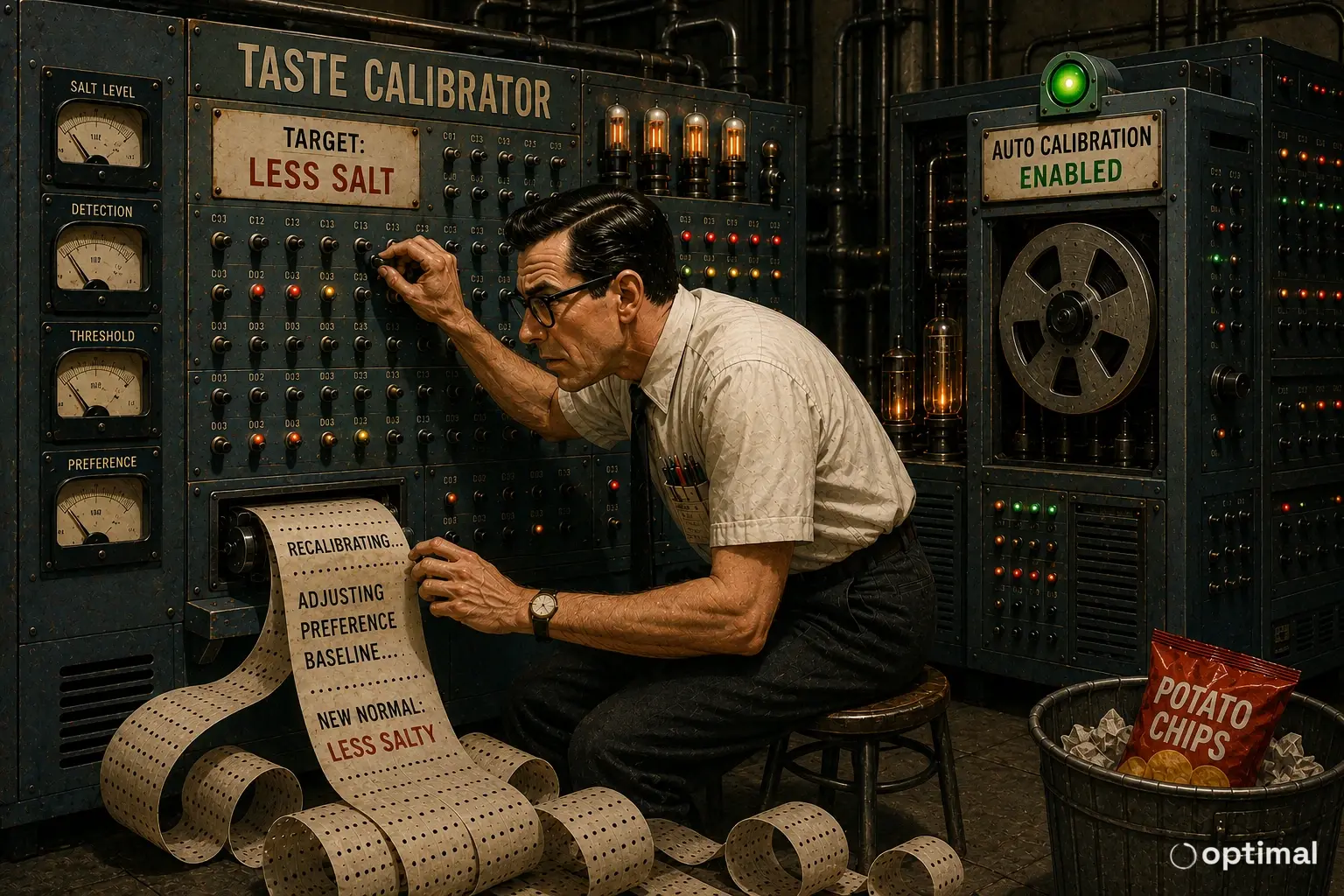
Small changes add up. Even a modest reduction in salt intake can help support lower blood pressure and better long-term health.
Make It Practical
The most effective way to reduce salt is not through one perfect day of eating. It is through repeatable habits. Choose one or two changes you can actually stick to, such as cooking one extra meal at home each week or swapping one high-salt product for a better option.
Track What Happens
If you are working on your blood pressure, it helps to track both your readings and the habits around them. Adding a few short health notes can make it easier to spot whether high-salt meals, takeaway food, or better routines are affecting your results.
Part of the optimal health library
Take action on your blood pressure
Create an account to start improving your health.
Create an account to start improving your health