
Fasting and Longevity
A Gentle Guide to Metabolic Reset
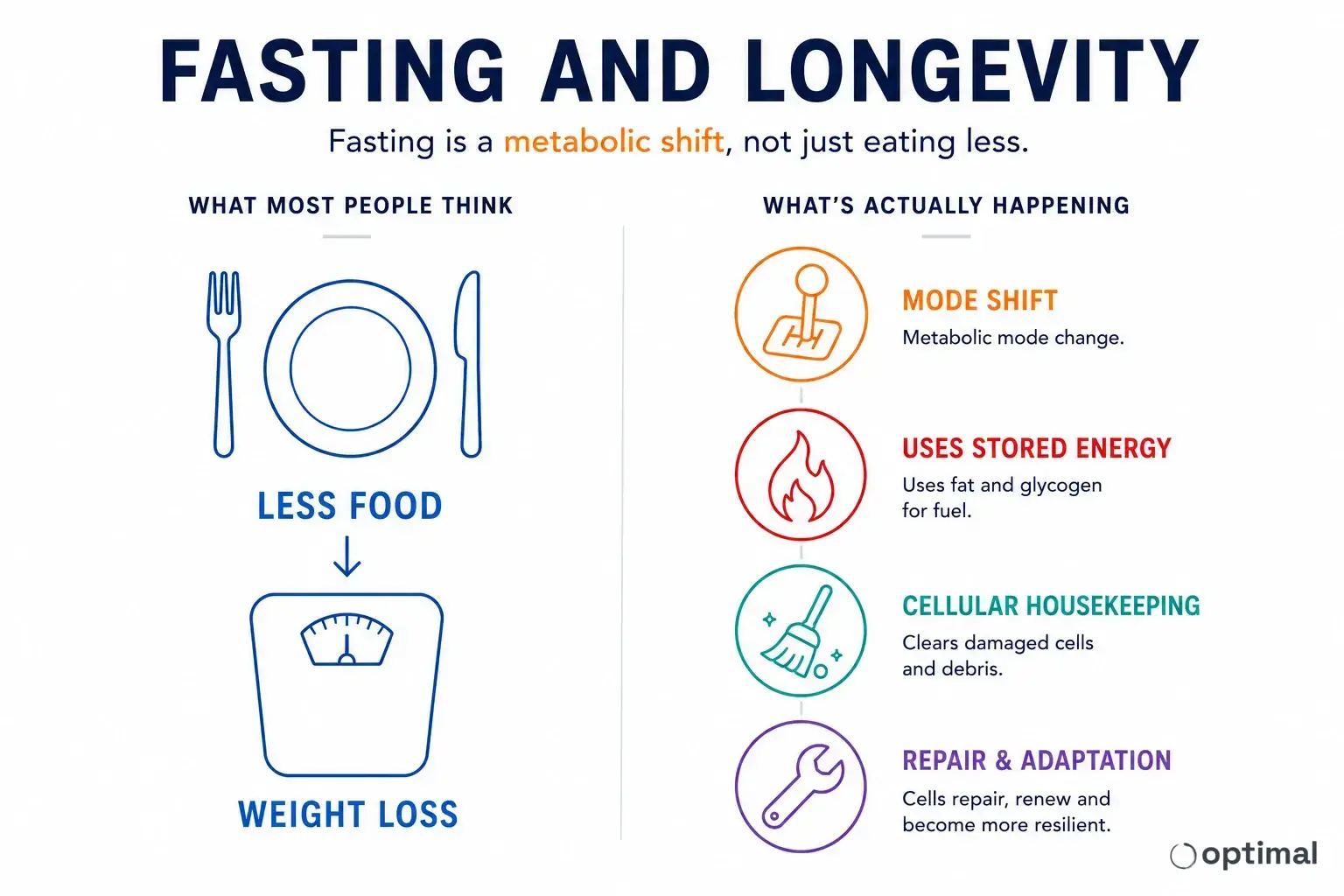
Fasting isn’t just skipping meals. It’s a signal to your body, a shift into a deeper mode of self-repair. Done gently and with intention, fasting can support some of the most important processes linked to long-term health and resilience.
What Happens When You Fast
After about 12–16 hours without food, your body starts activating systems that help it clean, repair, and reset. Some of the key changes include:
- Autophagy – Your cells begin recycling damaged components, clearing out clutter.
- Improved Insulin Sensitivity – Lower insulin levels help regulate blood sugar and reduce metabolic strain.
- Growth Hormone Support – This may help preserve lean tissue while your body relies more on stored fuel.
- Reduced Inflammatory Burden – Especially when fasting is paired with a generally healthy diet.
- Metabolic Flexibility – Your body gets better at switching between fuel sources.
Together, these shifts support what people often mean by healthspan: not just living longer, but staying healthier and more capable as you age.
Start Simple: Time-Restricted Eating
The easiest place to begin is with 16:8 time-restricted eating:
- Fast for 16 hours
- Eat during an 8-hour window (for example, 12pm–8pm)
For many people, this simply means delaying the first meal of the day. During the fasting window, water, black coffee, and unsweetened tea are usually the most practical choices.
The goal isn’t perfection, it’s rhythm. Start with 2 or 3 days a week and notice how you feel.
Going Deeper: The 24-Hour Fast
Once 16:8 feels natural, you might experiment with a 24-hour fast, for example from dinner one night to dinner the next. This gives your body more time away from constant digestion and can make metabolic switching feel easier over time.
For some people, doing this occasionally is enough. There is no prize for forcing it. Break the fast gently, with real food, and pay attention to how your body responds.
Things to Notice
- Energy & Mood – Some people feel sharper, others feel flat. It helps to keep notes rather than guessing.
- Cravings – These often change as meal timing becomes more consistent.
- Sleep – Fasting affects sleep differently for different people, so it is worth watching your own pattern and understanding how it connects to sleep and recovery.
- Training Performance – Some people train well while fasting, while others do better eating first.
If you are taking medication, have a health condition, or have any history that makes fasting complicated, speak to a qualified professional before making it part of your routine.
Final Thought
Fasting isn’t about punishment or purity. It’s about creating a little space in a culture that pushes constant consumption. For some people, that space supports better appetite regulation, steadier energy, and a more intentional relationship with food.
Paired with good sleep, sensible training, and food quality, fasting can become one useful part of a broader longevity rhythm. Start gently, stay observant, and let the practice earn its place in your life rather than forcing it.
Part of the optimal health library
Use fasting in your weekly plan
Create an account to use fasting as part of your weekly plan.
Create an account to use fasting in your plan