
Sleep and Recovery
The Foundation of Recovery
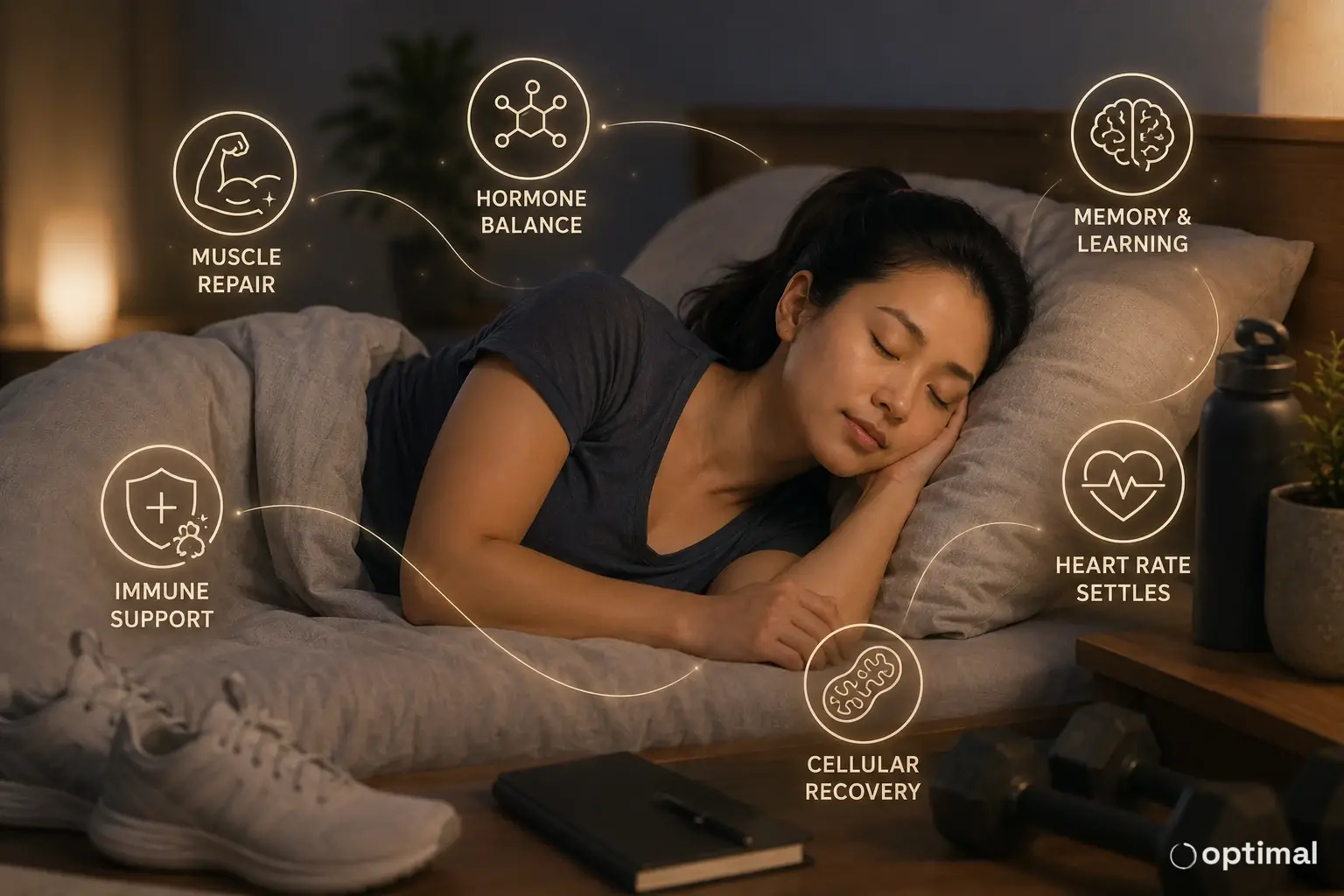
Sleep is one of the most powerful tools you have for improving health, recovery, and long-term resilience. It is not passive. While you sleep, your body is repairing tissue, regulating hormones, consolidating memory, and settling your nervous system.
Without enough quality sleep, almost every other health intervention becomes less effective. Training feels harder, recovery slows down, appetite becomes less reliable, and even simple metrics like resting heart rate can start to drift in the wrong direction.
What Sleep Supports
- Physical Recovery – Muscle repair and adaptation depend heavily on sleep.
- Hormonal Balance – Sleep helps regulate hunger, stress, and metabolic signals.
- Cognitive Function – Focus, memory, and decision-making all rely on adequate rest.
- Metabolic Health – Sleep quality affects how your body handles food and energy.
This is why sleep often amplifies the benefits of other habits, including training, nutrition, and approaches like fasting.
How Much Sleep Do You Need?
Most adults need somewhere between 7 and 9 hours per night. The exact number varies, but consistency matters almost as much as duration.
Going to sleep and waking at roughly the same time each day helps your body establish a rhythm. For many people, that improves sleep quality more than simply staying in bed longer.
Improving Sleep Quality
- Light Exposure – Get natural light early in the day and reduce bright light at night.
- Consistent Timing – Try to sleep and wake at similar times each day.
- Wind-Down Routine – Give your body a clear signal that the day is ending.
- Caffeine Timing – Avoid caffeine later in the day if it affects your sleep.
- Sleep Environment – A cool, dark, quiet room supports deeper sleep.
You do not need a perfect routine. You need one your body can recognise and settle into.
Things to Notice
- Energy – Do you feel steady or flat during the day?
- Training Performance – Are your workouts improving or stalling?
- Hunger and Cravings – Poor sleep often increases appetite and reduces control.
- Mood – Sleep and emotional regulation are closely linked.
It helps to keep notes on your sleep rather than relying on memory. Small patterns become much easier to spot over time.
Final Thought
Sleep is not something you earn after a productive day. It is part of what makes a productive, healthy life possible in the first place.
If you are deciding where to put your effort, sleep is one of the highest-return places to start. Build a rhythm, protect it where you can, and let it support everything else you are trying to do.
Part of the optimal health library
Understand your sleep
Create an account to see how your sleep connects to your health over time.
Create an account to see your sleep trends