
Glute Bridge
Equipment Required
- None (just a mat or carpeted floor)
- (Optional: Light dumbbell or weight plate for added resistance)
Muscle Groups Targeted
- Glutes (gluteus maximus)
- Hamstrings
- Lower back
- Core (stabilizers)
How To Do It
- Lie on your back with knees bent, feet flat on the floor and hip-width apart.
- Press your arms into the floor at your sides.
- Drive through your heels to lift your hips, squeezing your glutes at the top.
- Pause briefly, then lower your hips with control. Repeat.
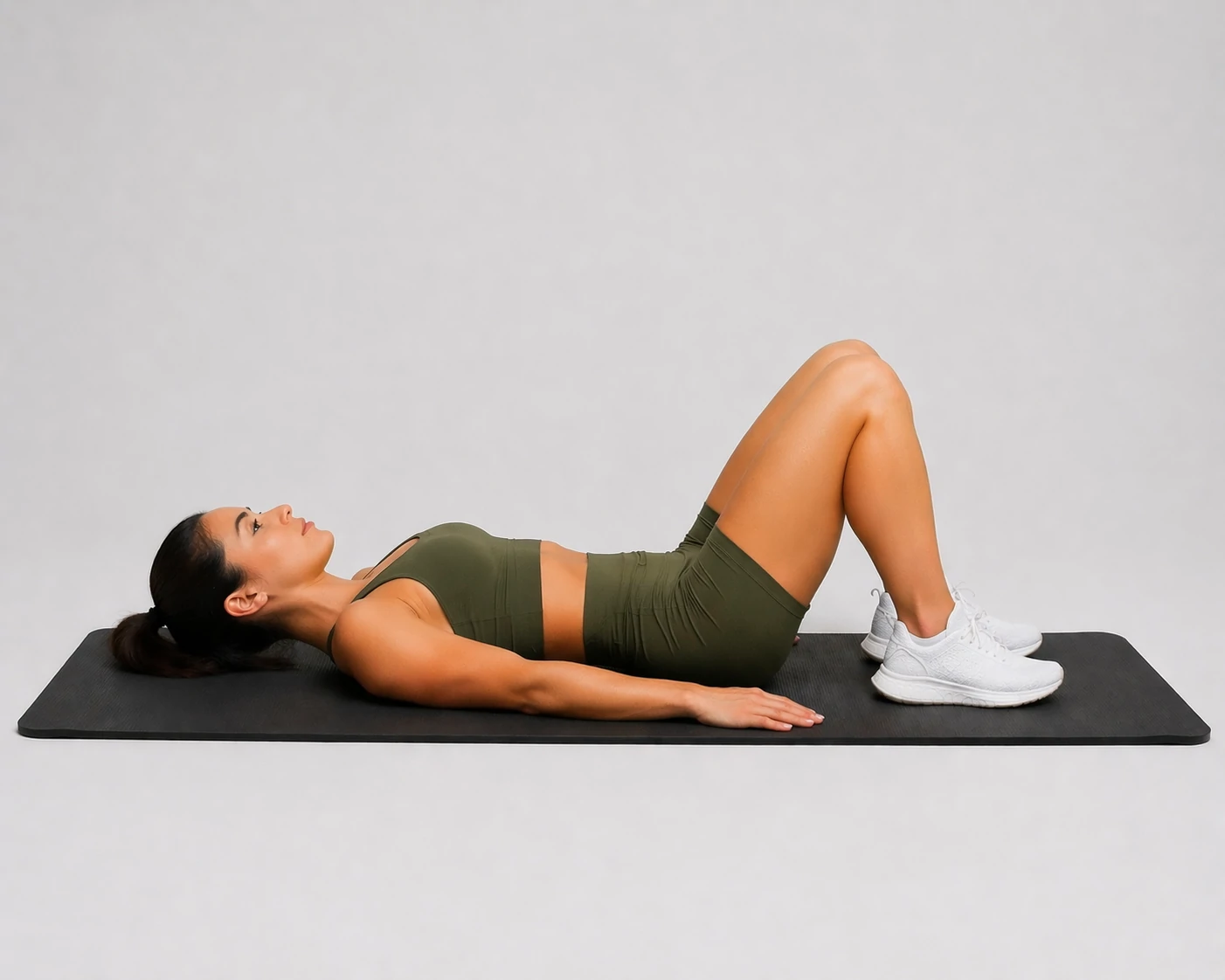
Start position
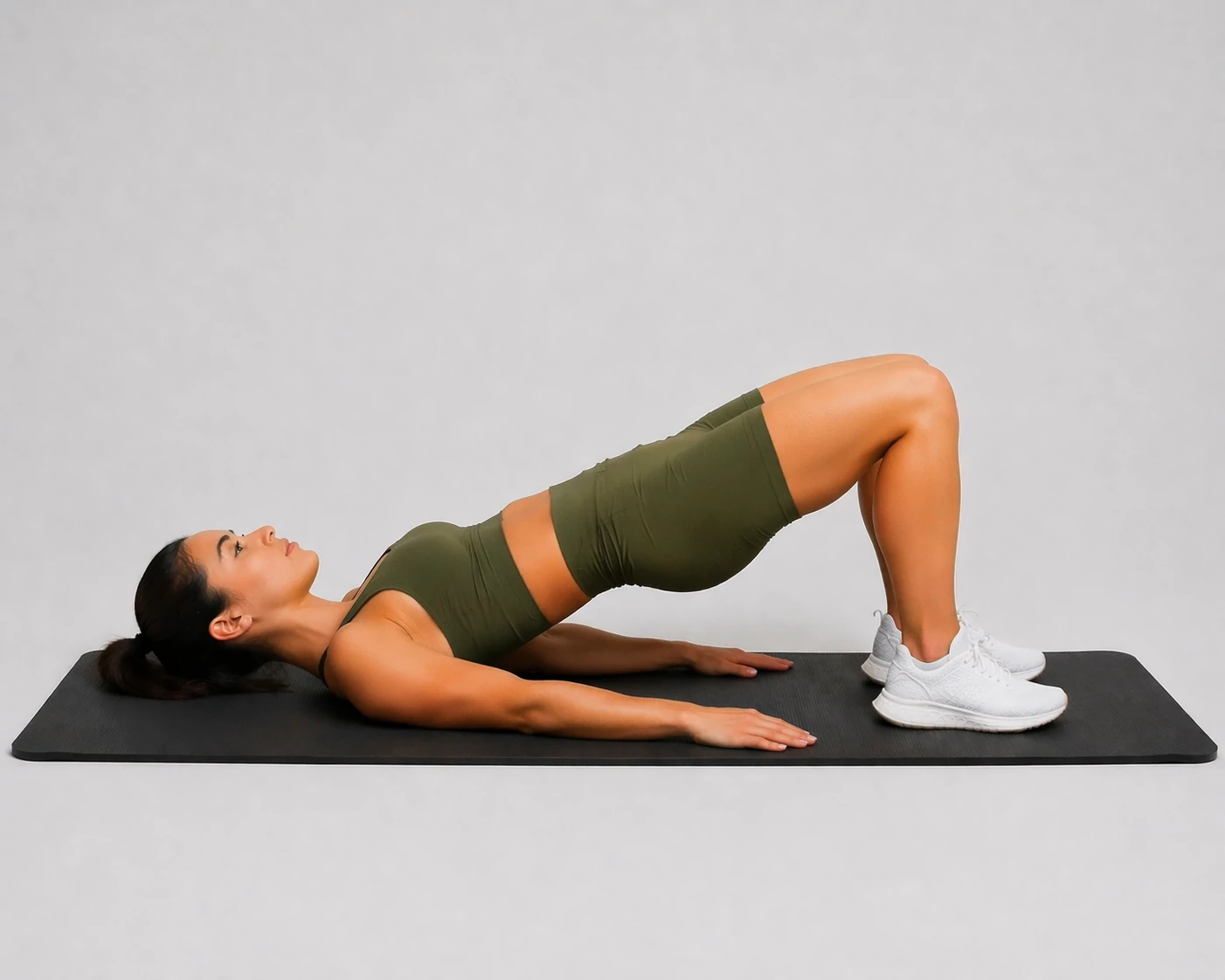
Lift hips and squeeze glutes
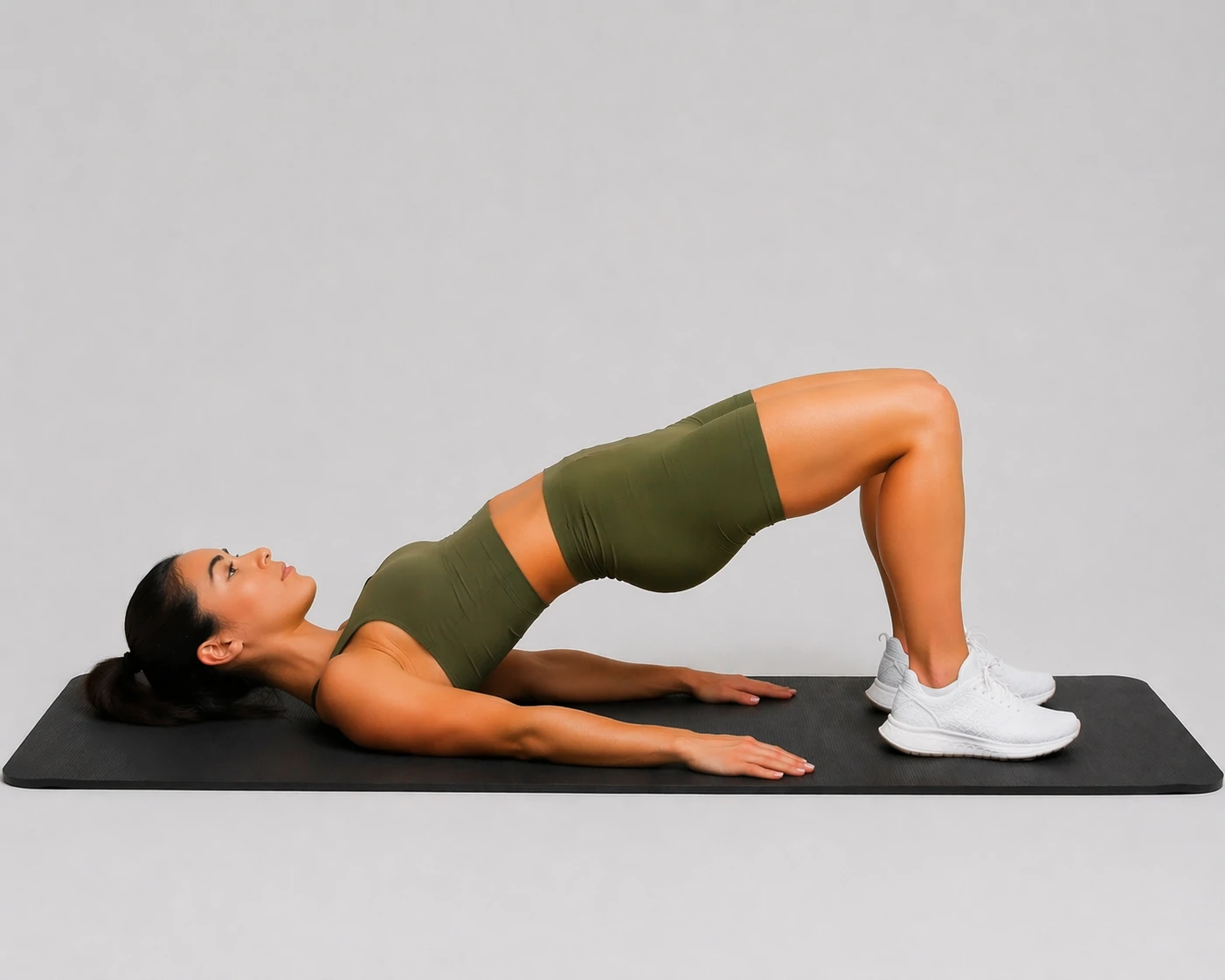
Avoid over-arching your lower back
Push evenly through both heels and keep your ribs tucked, don’t arch your lower back at the top.
Tips & Cues
- Think about “tilting your pelvis”, curl your tailbone up as you lift.
- Don’t flare your ribs; keep your abs slightly braced.
- To make it harder, try single-leg glute bridges or add a weight across your hips.
- Drive through your heels rather than your toes to keep the focus on your glutes.
- If you feel this more in your lower back than your glutes, it’s worth thinking about how you’re training around injury and adjusting your positioning.
Why It Matters
The glute bridge is a foundational movement for hip strength and control. It helps you learn how to properly engage your glutes, which is essential for almost every lower body movement.
This carries over directly into movements like the band deadlift, where strong hip extension is the key driver of power and control.
It’s also a simple way to counteract long periods of sitting. Strong, active glutes help support your lower back, improve posture, and make everyday movement feel easier and more stable.
Part of the optimal health library
Use this exercise in your training plan
Create an account to use exercises like the glute bridge in your training plan.
Create an account to use this exercise