
Reverse Lunge
The reverse lunge is a simple lower-body exercise that builds strength, balance, and control. Because you step backwards rather than forwards, it often feels more stable and more comfortable on the knees than a standard lunge.
Equipment Needed
- None. For added challenge, hold a pair of dumbbells.
Muscle Groups Targeted
- Quadriceps
- Glutes
- Hamstrings
- Core
- Calves
How to Do a Reverse Lunge
- Stand tall with your feet hip-width apart.
- Step one foot straight back and lower your body until both knees are bent comfortably.
- Keep your chest up and your front foot flat on the floor.
- Lower until your back knee is close to the floor, or as far as you can control well.
- Push through your front heel to return to standing.
- Alternate legs, or complete all reps on one side before switching.
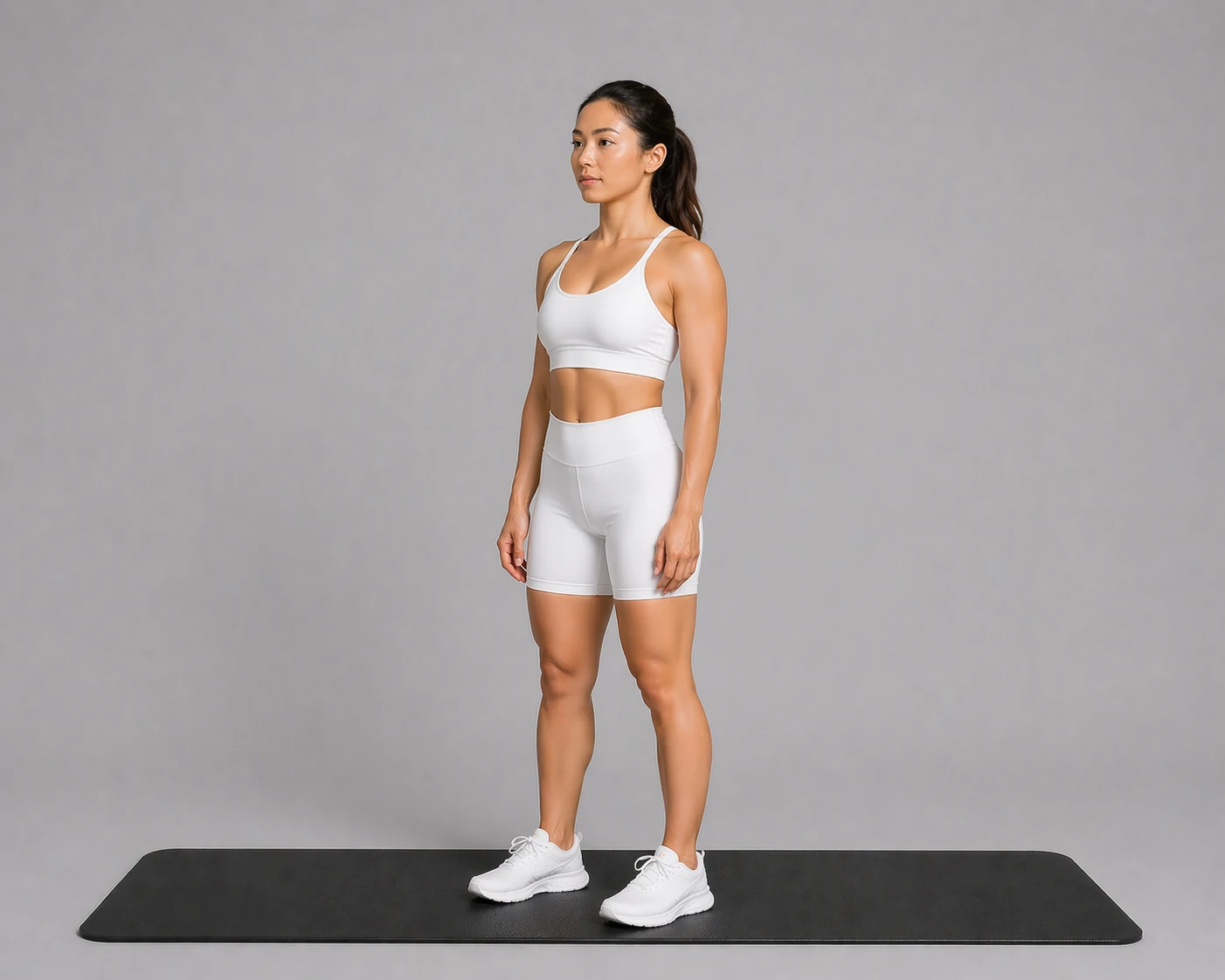
Start position
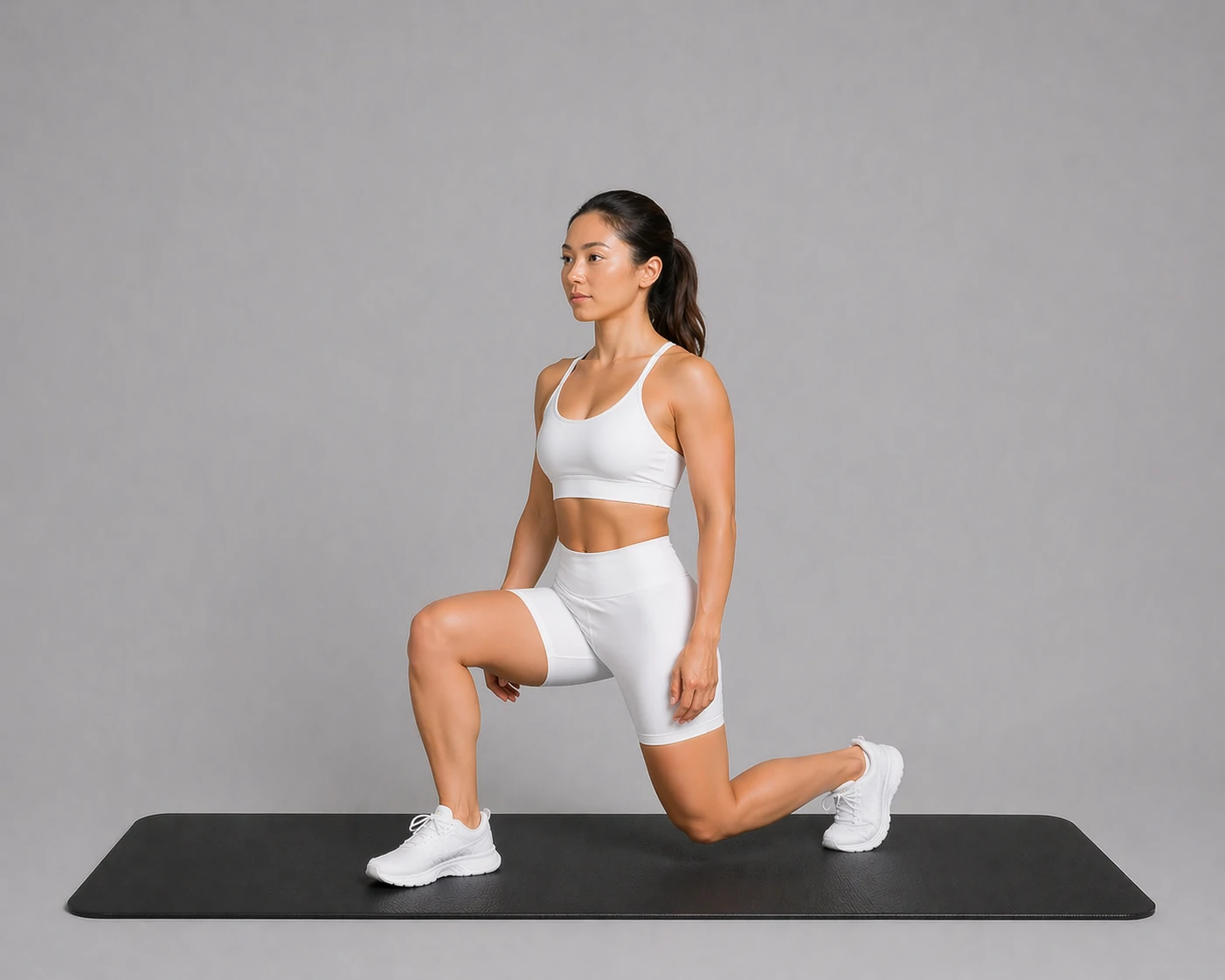
Step back and lower into the lunge
Tips for Success
- Keep your torso upright rather than leaning forward.
- Step back far enough that both knees can bend comfortably.
- Move slowly and under control, especially as you step back.
- If balance is an issue, use a chair or wall for support.
- If your knees, hips, or lower back feel off, adjust early and focus on training around injury.
The reverse lunge is a practical way to build leg strength one side at a time. Done well, it improves stability, control, and confidence in everyday movement.
When to Use This Exercise
Reverse lunges work well in most lower-body and full-body strength routines. They are especially useful if you want a single-leg movement that feels a little steadier than a forward lunge.
They also fit naturally into at-home training, warm-ups, and simple strength circuits, and pair well with movements like squats.
Part of the optimal health library
Add this exercise to your training plan
Create a free account to use this exercise in your training plan.
Create a free account to use this exercise